





The week of Jan. 18-25 is the National Week of Prayer for Christian Unity. For all people who call themselves Christian, this unity is an important goal. Jesus desired this when he prayed “That they may all be one, as you, Father, are in me and I in you, that they also may be in us; so that the world may know that you have sent me.” (John 17:21)
Christian unity is a great goal and a great challenge - all the more so since divisions began within the Christian faith. The first great split in the Church was in 1054 A.D., occurring between the Roman Church and the Eastern Orthodox Church. This division remains in effect today. The second major division occurred when the Protestant Reformation was ignited in 1517. The result of these two major divisions in the Church has been the creation of up to 43,000 “Christian Denominations,” most of which are within Western Protestantism. Christian unity is indeed a great challenge.
To face this challenge, we can begin by clearing up a misconception that emerges from our pluralistic society. Christian unity is not the idea that all paths lead to the same goal. To accept this premise would be to accept that there is no objective truth. This is not compatible with the gospel of Jesus that states objective truths. For example, Jesus said, “I am the way, the truth, and the life. No one comes to the Father, except through me.” There are many more such sayings by Jesus that make exclusive and objective claims. Christians cannot take the easy way out by merely trying to have warm feelings toward one another while avoiding the difficult work of doctrinal clarity and structural unity.
So what is Christian unity? Returning to John 17, we can make the case that Christian unity is a gift that Christ bestowed on his Church. This unity is celebrated in the sacrament of baptism, where new believers are cleansed of sin and included in God’s divine family. God the Father becomes our Father, Jesus the Son becomes our brother, Mary, the human mother of Jesus, becomes our mother, and therefore we call one another brothers and sisters in the Lord. This gift of familial unity through the power of the Holy Spirit is something that remains within the Church and can never be truly lost. However, it is the responsibility of those who profess faith in Jesus Christ to exercise this gift of unity to the best of our ability. Like Jesus’ parable of the talents given to the servants to use while the master was away, we are given the gift of unity to exercise. And like the end of the parable of the talents, we can either use it or lose it.
The Catechism of the Catholic Church #821 offers seven exercises for promoting Christian unity. And every Christian, no matter what faith tradition we claim, can benefit from these exercises.
1. A permanent renewal of the Church, in greater fidelity to her vocation; such renewal is the driving-force of the movement toward unity;
2. Conversion of heart as the faithful “try to live holier lives according to the Gospel”; for it is the unfaithfulness of the members to Christ’s gift which causes divisions;
3. Prayer in common, because “change of heart and holiness of life, along with public and private prayer for the unity of Christians, should be regarded as the soul of the whole ecumenical movement, and merits the name ‘spiritual ecumenism;’”
4. Fraternal knowledge of each other;
5. Ecumenical formation of the faithful
6. Dialogue among theologians and meetings among Christians of the different churches and communities;
7. Collaboration among Christians in various areas of service to mankind.
Those seven items are good “exercises” which can greatly assist our progress. However, one final thing is clear. Christian unity is bigger than we are. Ultimately, Christian unity is the work of Christ himself. Only He can work the miracle of bringing Christians into one body and one spirit. Christ will do this, and this work will be accomplished, one heart at a time. Meanwhile Christians can pray, work, and wait in joyful hope.
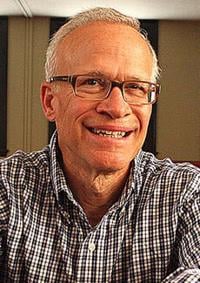
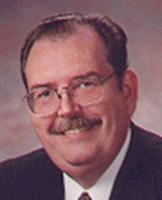
Editor’s note: Rev. William Bowling is the associate pastor at St. Augustine Parish and Holy Name of Mary Parish.
Add new comment
Read and share your thoughts on this story